The Architectural Orchid: Symbolism, Light, and the 'Desert Modernism' Revolution in the Gulf
In the design capitals of Riyadh and Dubai, the orchid has long been a staple of luxury hospitality. But as we move deeper into 2026, the way we perceive this flower has shifted. It is no longer just a "decoration"; it has become a structural anchor in the Desert Modernism movement—a style that favors raw, organic textures over the clinical "glitz" of the past decade.
1. The Symbolism of 'Refined Resilience'
The orchid is a biological marvel that reflects the modern Middle Eastern spirit. It is delicate in form but incredibly hardy—a concept we call Refined Resilience. In a region defined by rapid growth and a harsh environment, the orchid symbolizes the ability to thrive with grace under structure. When we design lighting for a villa or a grand Majlis, we treat the orchid as a living sculpture that requires its own "stage."
2. Lighting the Living Art: Technical Precision
To honor the symbolism of the orchid in 2026, you cannot rely on flat, overhead lighting.
-
The CRI Standard: We recommend using fixtures with a Color Rendering Index (CRI) of 95+. This ensures that the vibrant magentas and pure whites of the orchid are saturated and true to life, rather than washed out by standard LEDs.
-
Directional Shadows: By using narrow-beam, recessed spotlights, designers can cast a silhouette of the orchid onto matte-finish walls. This "shadow play" adds a layer of mystery and depth to the room, a hallmark of high-end Emirati design.
3. Pairing with Organic Materials
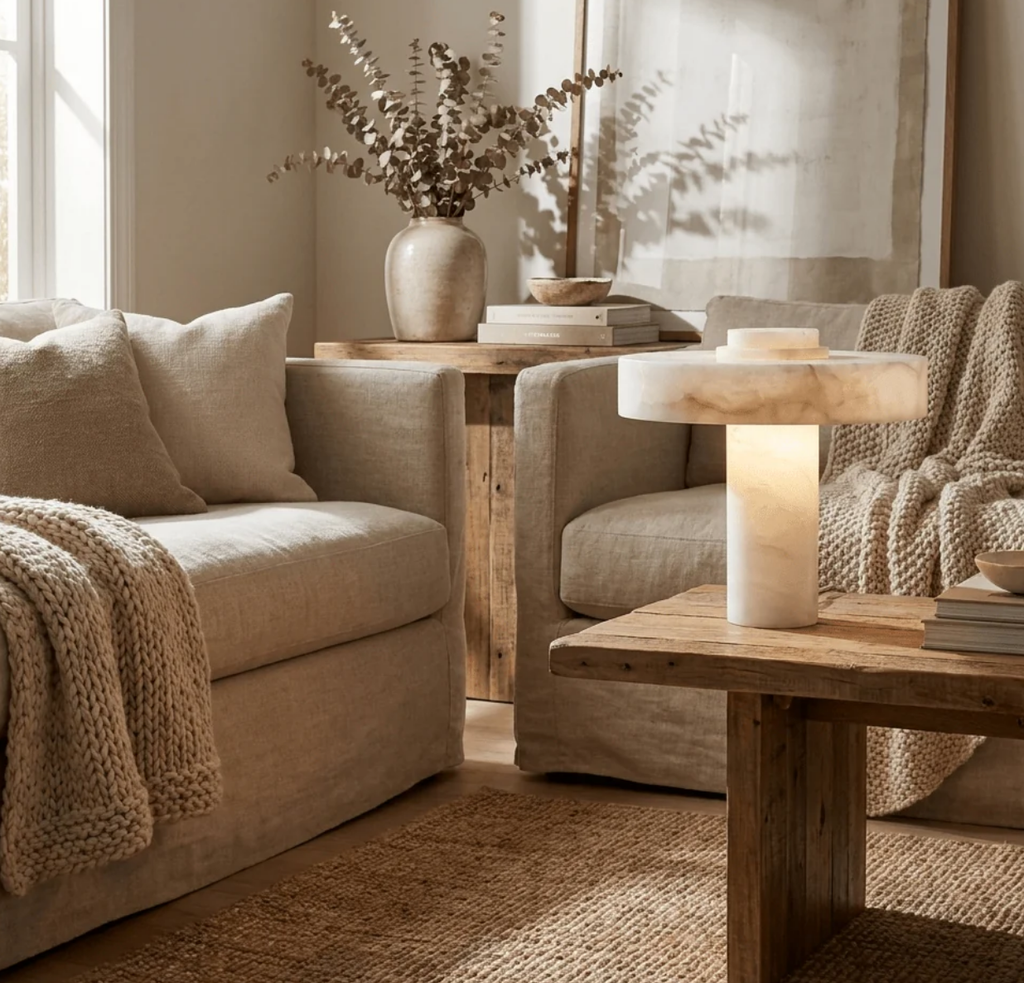
In the Desert Modernism aesthetic, we pair the organic curves of the orchid with the "grounded" weight of our 2026 Alabaster and Travertine collection. The translucency of natural stone lighting mimics the waxen petals of the flower, creating a cohesive visual language that feels connected to the earth.
Related post
06
May
05
May
04
May